Wednesday, April 29, 2009

Indexicality and Film

Indexicality refers to the existential bond between copy and reality. It has been defined in terms of the camera producing a “footprint” of the profilmic event., whatever is placed before the camera is recorded and through a chemical process of registering light produces the resulting image. Advancing technology and the move towards a digital cinema has resulted in arguments that digital imagery is no longer indexical. Lev Manovich writes that “cinema is the art of the index; it is an attempt to make art out of a footprint.” (Manovich, 2001). This seems to be a falsified, although common, interpretation of film. Film always involves manipulation to some degree, and one argument against new technology is that it is now easier to manipulate the image. The issue of indexicality and manipulation seems blown out of proportion considering a fictional film, by its very nature, is a construct of reality, and things filmed are rarely represented exactly as they appear in the real world.What the image is meant to represent is of more importance than how it is accomplished. 


Lev Manovich has outlined some of the aspects of the indexicality argument in his article “Digital Cinema and the History of a Moving Image.”  He writes that with new technology it is possible to generate an image directly on a computer screen, without ever recording physical reality; digital cinema makes no distinction between what is live-action and what is animated, as everything is reduced to pixels; and digital cinema possesses a “plasticity” that was absent from earlier live-action films, as pixels are more easily manipulated than raw footage. These are concerns surrounding a fear that cinematic realism will be lost ,which has defined so much of film theory in the past. The basic concern is that cinema will lose its basic principle of simply recording the world in which we live, the live-action quality of film. 


  Computer-generated imagery has created concerns pertaining to established film concepts; arguments against its use rely on definitions and analysis provided by early film theorists. This seems to be an attempt to prevent change to the medium so as to hold on to established theories. Rudolf Arnheim, for example, classified cinema based on its limitations in representing reality, as well as outlining why cinema was different from other art forms such as painting and literature. Today, the arguments are being reversed, claiming the early period discussed by Arnheim was actually a more accurate representation of reality than is achieved in todays “digitized” cinema.  Many arguments seem based on defending realism and old film methods, rather than accepting and embracing the changes in the technology. The fact that early film theorists rarely mentioned special effects, and classified film as something separate and different from animation represents how film was perceived in the past. Today, because these aspects were left relatively untheorized, it seems to be producing concern of how to incorporate these elements into established and accepted film theories. However, the writings on the history of cinema often describe some of films precursors as modes of animation, such as the zoetrope. In this respect film began as animation, as well, special effects have been incorporated throughout film history, A Trip to the Moon (Georges Méliès, 1902) for example used both animation and special effects in its production in 1902. It was a decision on the part of many theorists to leave these aspects out of their writing as it often does not fit with their theories about film, or for realists like Bazin, they did not agree with its use.


What will become of film studies if all the theories of the past become obsolete? This may be the question on the minds of modern film theorists. Manovich describes the current film situation as “born from animation, cinema pushed animation to its periphery, only in the end to become one particular case of animation.” (Manovich, 2001).  Perhaps it is time for all of film theory to be redefined, which would provide an interesting and challenging opportunity for modern film theorists. What we now consider early film history was, at the time, defined in terms of its limitations in representing reality, while now we can see that this was perhaps the most “realistic” time for cinema if you consider its reliance on lens-based recordings of reality (Manovich, 2001). Cinema universally shared this live-action quality which can now be entirely absent from films with the use of CGI. Film theory could be more useful in analyzing modern films if framed in a different manner, perhaps more like theory pertaining to literature and paintings, rather than building theory around its differences from these art forms like Arnheim. These were ideas tried in the past, and while not insignificant, theories need to change with the times. Studies in all of these art forms have now been around long enough to stop legitimizing them as relevant texts for analysis and to move on and evolve the theories to pertain to the modern situation. While how the image is produced should not be absent from theory, the meaning and context of film sequences seems to be an aspect more relevant to analysis. Indexicality could be used to describe what a filmed object represents in reality, rather than literally being a copy of a physical object. This would provide rich basis for analysis.


Anne Friedberg wrote in her article “The End of Cinema: Multimedia and Technological Change” that, “Without the discourse of film history, films would lose their historical identity, would slip into the fog of uncertain temporality.” (Friedberg, 2000) This statement could sum up the cause of concern among film theorists about the changes occurring in the film medium. Academics fear that with all the technological changes surrounding the cinema, both in how  films are made and in new modes of viewing, film as a medium may become obsolete. There is a concern that cinema is losing its identity, and the long sought answer to the question “What is cinema?” becomes even farther from their reach. Friedberg also writes “with the speed of such rapid and radical transformations. our technological environments cannot be conclusively theorized.” (Friedberg, 2000). This can be viewed as simply another reason to move on from past theories, let them remain in the study of film history, as it is important to see the progression the medium has taken, but we are moving into a new era that requires new methods of analysis. Old theories may not apply even in the near future of cinema, and if theorists and academics do not want film studies to become obsolete they should not stall the progression of theories, but embrace the changes as they occur. The technological changes are not going to end any time soon, so rather than writing about fears of what is happening, it makes more sense to attempt to adapt concepts like indexicality to the current situation. 


Peter Wollen, in his article “The Semiology of the Cinema” defines cinematic imagery in terms of signs and says “A sign is either an icon, and index, or a symbol.” (Wollen, 1972). In his definition of index he describes how a man with a rolling gait would be a probable indication that he is a sailor. This seems to be a more useful implementation of the term indexical, as the term can be used to infer meaning from a representation. Regarding cinema in terms of signs provides a richer opportunity for analysis than limiting the discussion more literally around how the image is a physical “copy” of the real-world. This definition can incorporate CGI and what the image is representing rather than how it is doing so. The theory surrounding indexicality, like much of film theory, must evolve with the times, it can not stay stuck in rigid definitions of the past, but must adapt to changes in the medium. The notion of indexicality is not often used to describe computer generated images, but there is no reason it can’t be used to describe the phenomena. If film theory does not adapt with the times, then the fear theorists hold about “the end of cinema” will occur. it is useless at this stage to try and stop the change, special effects and animation have always been a part of cinema history, and as their influences grow the theories must evolve to incorporate them, it is too late to stop the change, and pointless to hold onto outdated theories.


Whether the image is generated from pixels or light should be of less concern than why it was done.  Most films regardless of how they are produced work to hide the traces of their own production. Sets are often constructed and arranged, whether in the real world or on a computer screen, to produce a setting that would otherwise not exist. Live-action films involve editing and techniques that separate the shot from its real world context, the actual time and space aspect of the shot is lost for the purpose of the plot. Films are edited, and shots are reordered out of their original context. For example, a set may have only three walls, which will go unnoticed in the actual film as the camera is placed where the forth wall would be. In this way indexicality of the shot in live-action films seems of less importance than the result, as people don’t accept the set for what it is (three walls in a studio), but rather what it is meant to represent. This is not so very different from other modes of producing false realities, such as the use of CGI. An interesting live-action example of this situation is Field of Dreams (Phil Alden Robinson, 1989). During filming Iowa was experiencing a drought and the grass for the baseball diamond died and turned brown, so the film crew literally painted the grass green. Today the grass could have easily been modified with computer technology (with less harm done to the land), and the result would seemingly be just as indexical, either way the grass on set was not naturally green.  No matter which process was used, the set would still represent what we perceive a green baseball diamond to look like, both methods would have a real world referent regardless of how they were achieved.


Computer technology can liberate a filmmaker to produce anything he can envision. The opening “life of a bullet” sequence of Lord of War (Andrew Niccol, 2005) would not be possible with current film apparatus, as the shot follows a bullet through its stages of production and machinery, into boxes as it is shipped to its destination, and into a gun where it is eventually fired. A filmmaker can envision a shot, which can occur in the real world, and can now accomplish it without concern for limitations of camera technology. Should a film involving a volcano eruption delay its release until the filmmakers can capture the real-life footage they need? Should they limit themselves to stock footage? Or should filmmakers limit themselves to films about everyday occurrences so there is no need for computer technology? A CG volcano eruption will still take its referent from the real world, it will attempt to make a sequence of what a real volcano eruption looks like, while keeping the film crew out of danger. Spectators today should be given enough credit to know that computer technology is being used in the films they watch, no one would have assumed there were real dinosaurs on the set of Jurassic Park (Steven Speilberg, 1993), although the film contains what one would expect a dinosaur to look like, and it seems fair to use the technology available to make a “believable” film about anything. 


A “copy” can now be produced on a computer screen and this has been occurring more frequently over the last thirty years since the generation of the first Star Wars film. Indexicality, and film theory in general, need to be extended to account for this development. Rather than following the path of many past film theorists, who tended to ignore aspects of film that did not fit with their explanation of film, modern film theorists should begin to rethink the relationship between copies and their referents. Film images are no longer mere “footprints” of the real world, but now require a new definition to account for the change in the technology, which has great artistic potential.  The opening “floating feather” sequence of Forrest Gump (Robert Zemeckis, 1994) would not be possible without the use of CGI, and its use does not merit the sequence any less worthy of theorizing, in fact it seems the opposite, a director can achieve virtually any vision he may have, bringing film theory closer to poetry or literature analysis than it was in the past. The meaning behind the shot can be more rich when the shot comes from a vision, free of limitations of technology. There is an even greater potential for meaningful, artistic productions as the technology moves to a more computer based process. There are several critics who have written about meaning behind the floating feather at the beginning and end of the film; it is an artistic sequence that benefitted the film as a whole.


As has been suggested, computer imagery challenges the notion of indexicality pertaining to photographic realism, as the line between what is real and what is not real becomes more blurred. Stephen Prince has suggested a correspondence-based model, in which links are made between fictional realities and our own visual and social “real-world.” As even “unreal” images can be perceptually realistic, this would involve a relationship between the film or image and the spectator, rather than a relationship between the filmed object and its origin. Viewers perceptually correspond the images they see on screen to the world they know (Prince, 1996). This is the type of theory that we can move into the future with, it is more appropriate to current films than some of the past theories and concepts.


The Thirteenth Floor (Josef Rusnack, 1999) which we watched in class, contains three different time frames, the year 1937, late 1990s and 2024. How the filmmakers achieved believable representations of past and future time periods (whether sets were built, or computer graphics were used) is of less importance than  the perceptual reality discussed by Stephen Prince, the depictions of past and future can be accepted by the spectator as believable within the plot of the film. The 1937 setting still holds a referent of what 1937 looked like, while the future is a manufactured reality of what the filmmaker thinks it will look like. Of greater importance is to analyze how spectators perceive the film in relation to the world in which they live. It is time for film theory to catch up to its evolving image technologies, and account for the special effects and animation qualities of cinema. Theories that leave these aspects out are simply incomplete. It seems more important and meaningful to closely examine the relationship between the spectator and how they interpret what they see, whether it has a physical referent or is created on a computer.


With an ever changing medium the theory too must adapt. While the idea of indexicality does merit discussion, the move to a digital technology should not be feared and delayed, it can in fact liberate filmmakers to produce something new and exciting that has never been done. Analysis of realism has existed since films birth, the time has come to embrace film in relation to the spectator, to look for deeper meaning, as is the general process for so many other art forms. The attempt to legitimize film as something worth studying can be laid to rest, the program is already offered in many universities, and theorists need to move on to larger, more relevant ideas. Indexicality does not need to become obsolete within discussions of current film, but it needs to either incorporate computer generated images, or we need a new similar concept in order to explain the indexicality of digital imagery and how the spectator perceives these referents.


References


Friedberg, Anne (2000). “The End of Cinema: Multimedia and Technological Change.” Reinventing Film Studies. Eds. Christine Gledhill and Linda Williams. London: Arnold, 438-452.


Furstenau, Marc. Digital Theory: Cinema and New Technology Lecture. March 18, 2008.


Manovich, Lev (2001). “Digital Cinema and the History of a Moving Image.” The Language of New Media. Cambridge, MA: MIT Press, 293-308.


Prince, Stephen (1996). “True Lies: Perceptual Realism, Digital Images, and Film Theory.” Film Quarterly. Vol. 49, No. 3, 27-37.


Wollen, Peter (1972). “The Semiology of the Cinema.” Signs and Meaning in the Cinema. Bloomington: Indiana University Press, 116-154.

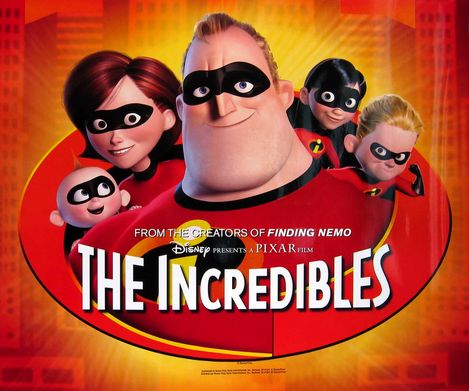
Analysis of the Use of Sound in The Incredibles Essay


Film is most frequently perceived as a visual medium, but as William Whittington has stated “sound is half the picture.”  Sound has the ability to inscribe meaning into a film. Randy Thom, a sound designer for Disney has stated that, “Sound may be the most powerful tool in the filmmaker’s arsenal in terms of its ability to seduce. That’s because ‘sound,’ as the great sound editor Alan Splet once said, ‘is a heart thing.’  We, the audience, interpret sound with our emotions, not our intellect” (Thom, Machinery Aimed at the Ear). Animation can utilize sound techniques to suggest, heighten, diminish, describe, exaggerate and evoke meaning into a film. This paper will explore sound theory in animation, using Disney as a case study for their innovations of sound in animated films and sequences from the film The Incredibles to demonstrate specific uses of sound.


Disney is credited as being the first to use sound-on-film techniques for the animated short, Steamboat Willie in 1928. Prior to this, films were often accompanied either by sound which was recorded separately, or with live accompaniment. To produce the sound for Steamboat Willie musicians recorded the music as they watched the pre-produced film strip. They “synchronized sonic motifs to visual depictions of Mickey Mouse” and thus produced the first embedded soundtrack (Hanna, 2008). This technique of matching animation synchronously with music was later termed “Mickey Mousing.” Later Disney films, such as The Jungle Book (1967) reversed this process by animating the characters to match the musical accompaniment. Characters mouths were animated to match the musicians who sang the songs. Suzie Hanna wrote, “Whether led by visual or audio content, a symbiotic relationship between animator and composer, as well as animator and performer, was established as soon as the technology allowed it” (Hanna, 2008). 


Director Brad Bird has stated that The Incredibles (2004, Brad Bird) is meant to reflect the difference between “the fantastic and the mundane” and it can be argued that this the contrast is most apparent through the use of sound.  The film is contrasted with calm, quiet scenes of everyday suburban life, juxtaposed with loud, action scenes of the life of the “fantastic” superheroes (Incredibles DVD).


The Incredibles is an interesting example of sound in animation as it incorporates both competing models of cartoon sound: Abstract Exaggeration and Greater Realism. What Bird described in The Incredibles as the fantastic versus the mundane.  The film can be separated into two different aspects of life; average life at home, school and work; and the exciting life of superheroes and the characters alter-egos.  Sequences such as a family dinner or the father at work tend to use the greater realism model of sound; the sound effects in these sequences resemble sounds that could realistically be audible in these situations. Following the model of early Disney feature length animations. Many of these scenes do not contain non-diegetic music, another technique which adds to their realistic quality.  


The superhero sequences on the other hand require substantially more sound effects, frequently using the abstract exaggeration model.  Due to the characters superpowers, hypothetical sounds are needed to convey aspects that could otherwise not be represented, such as the sound of Elastagirl as she stretches. These scenes also contain music for a more dramatic effect, unlike the scenes at home and the father’s office.  This is likely a conscious effort on the part of the sound designers, to keep some scenes quiet and realistic to reflect the normal (boring) life of the characters, and contrast this with the fantastic, overwhelming lifestyle of the characters as superheroes.


It is perhaps essential to differentiate between the use of sound in live-action films and animation for the purpose of this paper.  Synchronized sound in live action film has an indexical connection; since it is impossible for the relationship of sound and image in animation to be indexical, it is represented iconically (Wright, 2007).  This distinction is becoming blurred as animation and live-action techniques are used in combination more frequently. Lev Manovich writes that CGI technologies are redefining the very nature of cinema. Cinema was born from animation, hand drawn images were animated manually prior to the invention of film. The two trends diverged however as theorists began defining and analyzing film as a “lens based recording of reality.” Cinema as defined by Manovich became an art of the index; an attempt to make art out of a footprint. Animation, on the other hand, “Foregrounds its artificial nature, openly admitting that its images are mere representations” (Manovich, 2002). 


CGI has developed insofar as believable representations of reality, or hyper-real images can be manufactured using pixels, rather than operating as a copy of an original image. Manovich writes, “Consequently, cinema can no longer be clearly distinguished from animation. It is no longer an indexical media technology but, rather, a subgenre of painting” (Manovich, 2002). While not a Disney film, Beowulf (2007) is a modern example of hyper-real digital imagery in cinema. The characters were created using CGI technology, while resembling the actors voicing each character. As the distinctions between animation and film blur, and their definitions shift, sound theory will soon have to adapt to these changes as well.


Sound in The Incredibles employs both competing models of animated sound; leaning towards that of greater realism common of Disney films since Snow White; while also employing elements of abstract exaggeration. The mundane “normal” life of the characters as well as a majority of settings within the film, implement a realistic implementation of sound. Due to the nature of the film and the superheroes’ powers, methods of abstract exaggeration have been incorporated, such as the sound of Dash’s super speed and Helen’s stretchiness. 


“Voices, Music, and Sound Effects [in the greater realism model] are used in a more conservative manner, reflecting live action cinema and the continuity system. While narratives retained elements of fantasy, the image and sound track respects the codes of reality” (Wright, 2007). In 3-D animated films such as those produced by Pixar, sound breathes life into lifeless images. Voices add tone, texture, and personality. Music highlights drama, enhances pace, and sets tone.  Sound effects add mass and weight to drawings and computer generated images (CGI).  Michel Chion describes this technique as rendering sound… Although animated images are modeled in three dimensions with shadow and light, they remain relatively flat creations…Sound needs to convey if something is hollow or heavy in an animated context. (Chion, 1994).  In The Incredibles music and voice intonation are the methods employed to depict the appropriate emotion, while sound effects “give life” to the images on the screen. This again relates to sounds of Helen’s stretchiness and Dash’s super speed, as they are represented through sound. These accompanying sound effects don’t just support the action but they add to its overall effect as well.


Disney’s first feature length film Snow White and Seven Dwarfs (1937) attempted to realistically depict human characters (also attempted in The Incredibles, Disney’s first all human 3D animation). In order to capture a sense of realism they had a dancer pose in the studio so they could capture her fluid movements realistically for Snow White’s character. Disney also wanted to incorporate realistic sound. He had a particular voice in mind and auditioned several singers to find a “mellifluous, sweet and youthful voice” that would suit the character he envisioned. Another key element was music. Disney wanted to use music in a new way within a narrative film. He wanted to “weave it into the story so somebody doesn’t just burst into song” (Jackson, 1993).


  Randy Thom provides a useful and lengthy list of the ways in which sound can be utilized within film in his article, “Designing a Movie for Sound.” He states, “Music, dialogue, and sound effects can each do any of the following jobs, and many more: suggest a mood; evoke a feeling; set a pace; indicate a geographical locale; indicate a historical period; clarify the plot; define a character; connect otherwise unconnected ideas, characters, places, images, or moments; heighten realism or diminish it; heighten ambiguity or diminish it; draw attention to a detail, or away from it; indicate changes in time; smooth otherwise abrupt changes between shots or scenes; emphasize a transition for dramatic effect; describe an acoustic space; startle or soothe; exaggerate action or mediate it” (Thom, Designing).


Thom employed many, if not all, of these methods within The Incredibles. He used sound techniques to allow the audience to know what characters were feeling at various points within the film; and to separate what Brad Bird called the fantastic from the mundane. This first idea is perhaps the most important distinction, as all members of the superhero family go through various emotional changes throughout the course of the film, and these emotional changes may not be as readily apparent, or possible to portray without the implementation of sound.  Mary Ann Doane has explained, “Sound and image are used as guarantors of two radically different modes of knowing (emotion and intellection),” and “sound and image, ‘married’ together, propose a drama of the individual, of psychological realism” (Doane, 1985). We can get a better understanding of the characters as both sound and image can reflect different character traits.


Sound can provide a different meaning than the image, but most commonly within Disney animations, the sound is working to reinforce and heighten the meaning that is being presented within the image.  The scenery, lighting, color scheme, facial expressions and sound of these animated films all have to be created, and all work together simultaneously to invoke various meanings.  Doane’s quotation here is not referring to animation, as she says the image can be taken as a representation of reality, but it is important to understand that the sound can provide meaning that may not be apparent in the image itself. Michel Chion described the relationship between sound and image by suggesting, “The image is the projected and the sound is the projector, in that sense the latter projects meanings and values onto the image” (Chion, 1994).


Disney Studio was responsible for many innovations to animation. Such as the first feature length animation (Snow White), the first sound-on-film animation, as well as the first Technicolor animation. Disney is also notable for its experimental sound techniques. Fantasia, although not successful commercially, was an attempt to make a feature length film animated to music. Rather than following a narrative, the film acts more as an animated concert. Disney also produced the animated short series Silly Symphony which had animated images and music operating in synchronization. Walt Disney saw the primary technique of animation as “bringing images to life,” he demanded a sense of ‘naturalness’ in his animations. He saw animation as needing to convey an “illusion of reality” and music as already having a life of its own (Brophy, 1991). The challenge lied in attempting to bring these two aspects together; the artificial nature of the illustrated image, and the organic nature of sound. Ernest Walter has said, “Music is used to create an atmosphere which would other wise be impossible...Often, it is an augmented effect blending with dialogue so that one is almost unaware of its musical presence, yet adding so much to the value of the scene” (Thom, Designing). 


Both music and voice intonation can represent various emotions of characters within animation.  Brad Bird, when discussing The Incredibles said, “The thing that amazes me about music is that in a certain way it’s not specific, but emotionally it’s completely specific” (Incredibles DVD).  Randy Thom when describing music in animation said, “A well-orchestrated and recorded piece of musical score has minimal value if it hasn’t been integrated into the film as a whole…Sound, musical and otherwise, has value when it is part of a continuum, when it changes over time, has dynamics, and resonates with other sound and with other sensory experiences”  (Thom, Designing a Movie for Sound). 


A scene which invokes a strong sense of “feeling” in The Incredibles is when Elastagirl and Mr. Incredible are first shown interacting on a rooftop near the start of the film. This sequence employs both music and voice intonation to reach the desired effect. As Walter Murch has described, “Music [unlike speech] is sound experienced directly, without any code intervening between you and it. Naked. Whatever meaning there is in a piece of music is ‘embodied’ in the sound itself.  This is why music is sometimes called the Universal Language.” (Murch, Dense Clarity - Clear Density). He goes on to explain that there are musical elements that can work their way into almost all speech; you can tell by the tone of someone’s voice; how they say something; what they are feeling; whether they be happy or angry.   In this scene the audience can instantly recognizable that the two characters are attracted to one another due to their tone of voice and other sound implementstions.  Elastigirl speaks in a slow seducing tone, and the non-diegetic music accompanying the scene is a romantic jazz number. To further the effect, Mr. Incredible whistles his interest as Elastigirl departs, and there are “whimsical” sound effects playing in the background, connoting the idea of love.  The image adds to the effect by showing the two characters close together, under golden lighting as the sun sets.  


Mary Ann Doane writes, “The ‘value’ alluded to remains unexplained…the concept is inaccessible to language, to analysis, or to intellect understanding.  Sound is a bearer of a meaning which is communicable and valid but unanalyzable” (Doane, 1985). In this particular scene, the sound is deceiving the audience because it seems to suggest the two characters are casually flirting, especially in terms of the dialogue, as Elastigirl coyly tells Mr. Incredible she is busy later that night and can’t go on a date with him; and we soon discover they are fiancés and their wedding occurs that very evening. This is an example of sound adding meaning to an image that may not be possible in silence. Randy Thom described this effect in “Designing a Movie for Sound,” “We know that we want to sometimes use the camera to withhold information, to tease, or to put it more bluntly: to seduce. The most compelling method of seduction is inevitably going to involve sound as well” (Thom, Machinery).


It would be inadequate to discuss sound in The Incredibles without referring to the sequence known as “The 100 Mile Dash,” in which the character Dash first realizes how fast he is capable of traveling (one of the emotional changes discussed earlier).  This realization comes about because of the danger he is faced with in the form of a terrifying and high-speed space ship. Randy Thom discussed how this effect was achieved in an article in the “San Francisco Chronicle,” he says, “We have enormous latitude in an animated film to create this sonic world from zero. And we have a whole palette of sounds we can use to create a mood. We can make it seem sinister or light.” Referring to the sound of the velocipods he says, “This is a sinister sound -- something that the character Dash hears. He's being chased by these flying saucer-like things called velocipods. When I began to do the sound for this, I thought about what things in the world are fast, and sound fast. There are jets, rockets, race cars. And I thought, race cars might work -- they sound high tech, and they make a revving sound when they prepare to go fast; you can't do that with a jet engine. I started listening to all the samples we have in our library of race car sounds and chose one. Then the trick is to fiddle with it, so that when the audience is sitting in the theater they’re not thinking, where’s the race car? I’m hearing a race car!”  (Ganahal, 2005). In The Making Of portion of the DVD he goes on to say that to make these vehicles sound dangerous he added the sound of knives rubbing against each other and than slightly distorted them.  This sound explains to the audience how dangerous and fast the velocipods are.  The music that accompanies this scene is a kind of frantic, fast paced xylophone as Dash runs away, which gets slower, deeper and more terrifying, through the use of trombones and other instruments when the velocipods get close to him. Dash’s speed is also accentuated by the accompaniment of quick, light sounding footsteps. The music in this sequence has the effect of speed, urgency, danger, and triumph as the plot progresses. 


Randy Thom has discussed a similar idea to this in reference to sound in action and sci-fi films, He wrote. “You begin by trying to forget for a while what the Nazi tank in an Indiana Jones film would “really” sound like, and start thinking about what it would FEEL LIKE in a nightmare. The treads would be like spinning samurai blades. The engine would be like the growl of an angry beast. You then go out and find sounds that have those qualities, or alter sounds to make them have those qualities. It makes no difference whether the sounds you collect actually have anything to do with tanks, samurai blades, or growling animals. The essential emotional quality of the sounds is virtually ALL that matters” (Thom, Designing). This idea is especially important in relation to The Incredibles because it is an animated film, it does not have to be represented as reality insofar as live action films do. Sound designers are left with more potential to influence the “feeling” and emotional qualities of sound as they are freed from attempting synchronized indexicality.  


In “Designing a Film for Sound” Thom wrote about the use of sound to give a sense of a particular location. He says it is possible to “produce a set of sounds which range from banal to exciting to frightening to weird to comforting to ugly to beautiful. The place can therefore become a character, and have its own voice, with a range of ‘emotions’ and ‘moods’” (Thom, Designing). Within The Incredibles the costume designer known as “E” has a very large home, and when the characters speak in this location you can get a sense of its size through an echoing caverness quality to the characters voices and footsteps.  


The Incredibles employs various techniques through sound to suggest, define, heighten, diminish, describe, exaggerate and evoke meaning onto the images within the film.  As an animated film, sound becomes essential to provide meaning and give life to the otherwise lifeless image.  Sound in The Incredibles is used to expose the emotions of the characters and assists in portraying the inner changes each character experiences the film. The sound techniques help show the strengthening of the parent’s relationship, the fathers growing happiness as he returns to the life of superhero, and the children’s emotional changes as they became more conscious of their powers, and more aware of themselves as individuals. 


Various sounds help to differentiate the contesting aspects of The Incredibles, the opposition between the fantastic and the mundane. Sound can heighten the dramatic effect or diminish it when appropriate for the plot. In addition, sound can give the various locations within the film their own mood and emotional qualities.  As many theorists have explained, sound makes its appeal on the senses of the spectator while the image aims more at the intellect.  It is sound which adds real meaning to the film. As Randy Thom stated in The Making Of portion of The Incredibles DVD, “People sometimes say that film is a visual medium, but in fact it really doesn’t function without sound.”


Bibliography


Brophy, Philip. “The Animation of Sound.” Illusions of Life. Ed. Alan Cholodenko. Sydney: Power Publications. 7-112.


Chion, Michel. “Sound Film- Worthy of the Name.” Audio Vision: Sound on Screen. New York: Columbia University Press, 1994. 141-156.


Doane, Mary Ann. “Ideology and the Practice of Sound Editing and Mixing.” Film Sound: Theory and Practice. Eds. Elisabeth Weis and John Belton. New York: Columbia University Press, 1985. 54-62.


Ganahl, Jane. “With an ear for storytelling, Randy Thom makes the audience believe what they hear.” San Francisco Chronicle. 22 Feb. 2005: E-1. 30 Nov. 2008.http://www.sfgate.com/cgibin/article.cg?file=/c/a/2005/02/22/DDGSHBDIAV1.DTL


Hanna, Suzie. “Composers and animators – the creation of interpretative and collaborative vocabularies.” Journal of Media Practice. 2008. Vol. 9: 1.


Jackson, Kathy Merlock. “Walt Disney: A Bio-Bibliography.” Westport: Grenwood Press, 1993.


Manovich, Lev. “Digital Cinema and the History of a Moving Image.” The Language of New Media. Massachusetts: MIT Press, 2002. 293-308. 


Murch, Walter. “Dense Clarity-Clear Density.” 30 Nov. 2008. http://www.ps1.org/cut/volume/murch.html


Thom, Randy. “Designing a Movie for Sound.” FilmSound.org: Learning Space dedicated to the  Art and Analyses of Film Sound Design. 30 Nov. 2008. http://www.filmsound.org/articles/designing_for_sound.htm


Thom, Randy. “The Machinery Aimed At the Ear.” FilmSound.org: Learning Space dedicated to the Art and Analyses of Film Sound Design. 27 Nov. 2008.http://www.filmsound.org/randythom/machinery.htm


Wright, Benjamin. “Animation.” FILM 3901 (B). Carleton University. 5 Nov. 2007. 


Fan Culture and Blade Runner Essay


With the advent of new media technologies audiences’ sense of authorship and authenticity are changing. The growing trend of fan edits and fan fiction on the Internet can be viewed as a postmodern practice, as audience involvement in meaning creation constitutes one element of the postmodern. This paper will examine the film Blade Runner (Ridley Scott, 1982) in the context of postmodernism and fan culture. It will outline how Blade Runner and fan cultures are postmodern relating to audiences as active participants in meaning creation and the production of alternative meanings. It will examine various audience interpretations and creations diverging from the original text, thus challenging the “authentic” film and intended reception. 


Henry Jenkins discusses fan cultures as “participatory cultures” and says it is “anything but fringe or underground today. Fan fiction can be accessed in astonishing quantities and diversities by anyone who knows how to Google” (Jenkins, 2006). This culture includes such practices as fan edits, fan fiction, blogging and internet forums. Any practice that involves negotiating or creating meanings surrounding cultural products. This paper will return to the concept of fan culture in relation to the film Blade Runner after an introduction to postmodernism and how Blade Runner can be viewed as a postmodern film.


Any discussion of postmodernism is complicated due to diverging definitions by theorists, as well as the difficulty in separating the postmodern from the modern. It is further complicated in the context of film, because cinema itself was outlined by Walter Benjamin to be a modern technology. Sturken and Cartwright point out that, “The distinctions between modern art styles and postmodern styles reveal overlapping strategies and interests” (Sturken and Cartwright, 2009). However, this paper will attempt to identify some elements of postmodernism which can be applied to the film Blade Runner and fan cultures. To explain postmodernism one must first consider the modern, as “post” suggests it precedes something. This paper will primarily implement the definitions of modern and postmodern as outlined by Sturken and Cartwright in Practices of Looking. They write that the period of modernity began around the nineteenth century and continues to present day, thus making the theory of postmodernism, which became prominent in the 1970s, problematic as the two are now occurring simultaneously.  A defining aspect of modernism is a trust in metanarratives, which are frameworks that aim to comprehensively explain all aspects of society and the world (Sturken and Cartwright, 2009).  One example is the belief that science is a means to achieve social progress and move closer to achieving “the truth,” as well as faith in notions of religion, law, education, capitalism and politics (Sturken and Cartwright, 2009).


Sturken and Cartwright note, “The postmodern is characterized by the questioning of the supposed universality of structural knowledge, as well as a skepticism about the modern belief in the universality of progress” (Sturken and Cartwright, 2009). While Pooke and Newall in Art History describe the postmodern as often having a particular stance in relation to the modern. They write, “If we understand one form of modernism as being concerned with what aesthetic practice should be, then the postmodern can be interpreted as a more or less conscious reaction to this” (Pooke and Newall, 2007, 169). In terms of fan culture, the appropriation of existing texts for individual purposes, such as fan edits and fan fiction, give existing texts new meaning. These practices operate as postmodern texts because they challenge the notion of singular truths and master narratives. They enable audiences to find and create their own truths within popular narratives. The postmodern is a response to conditions of modernism and the late stages of capitalism, it emphasizes one’s own involvement in low or popular culture, and rejects notions that there is one truth to encourage finding truth on an individual basis, which is demonstrated within fan culture practices. These aspects demonstrate the postmodern skepticism towards metanarratives and linear truths, as well as its oppositional stance towards modernism (Sturken and Cartwright, 2007). The postmodern is not just a change in art styles, but a change in ideologies. Sturken and Cartwright make clear that we do not live in a postmodern world, but a world where the modern and postmodern are in constant tension. This tension is also observable in Blade Runner, as Verun Begley points out in Blade Runner and the Postmodern: A Reconsideration, the film can be read in terms of modernity or postmodernity (Begley, 2004). 


Linda Hutcheon describes postmodernism as emerging out of uniformity and mass culture, as well as to interrogate the notion of consensus. She explains that the narratives and systems in our society that allowed us to think we could “unproblematically define public agreement, have now been questioned by the acknowledgement of differences- through theory and artistic practice” (Hutcheon, 1987). Hutcheon concludes that postmodern art questions all that is viewed as natural, eternal or universal and therefore viewed as unchangeable. This is demonstrated through practices of fan culture, as cultural productions do not meet all fans needs and beliefs and therefore consensus, so fans appropriate these texts and interpret them in new and different ways. Multiple versions of a text inevitably result in multiple meanings. 


Frederick Jameson identifies pastiche as the key element of postmodern style. Pastiche is the technique of borrowing, quoting or plagiarizing previous styles with no reference to their historical context. In the case of film, this can include genre mixing, which is apparent in Blade Runner as the film mixes film noir with science fiction. Sturken and Cartwright add that, “One of the key strategies of pastiche is a questioning of the original” (Sturken and Cartwright, 2009). This questioning of the original is prevalent in fan culture practices which can be viewed as a form of pastiche, a notion that will be further explored within this paper.  


Blade Runner is one of the films most frequently interpreted as postmodern, as well as being the first film to release a Director’s Cut. In addition, the film now has four versions released by the studio, which makes this film an interesting example for exploration relating to postmodernism and multiple meanings. The film takes place in 2019, a blade runner named Deckard is called out of retirement to track down and kill four escaped replicants. Replicants are man-made robots indistinguishable from humans by their appearance, used as slave labour on “Off-world” communities. The world is in a state of destruction, so people have begun to move to these “Off-world” locations, which are simulated representations of earth. Both the replicants and the Off-world locations (although never depicted in the film) can be viewed as simulacra, or empty copies, which is a feature Sturken and Cartwright outline as postmodern. 


Visual clues throughout the film suggest the blade runner may be a replicant himself, which is presented in differing degrees depending on which version of the film you watch. In the Director’s Cut, this is depicted visually as the main character has a dream about a unicorn and another blade runner who leaves origami at the locations of replicants deaths, leaves a unicorn on the character’s front step. The film (as well as the director in interviews) does not specify whether the blade runner is a replicant, but leaves it up the viewer to interpret and decide for themselves (Begley, 2004). Using Thelma and Louise as an example, Jenkins describes that gaps, irresolutions, excesses, contradictions, unmotivated actions, and moral ambiguities all demand viewer participation. They require the viewer to make judgements or speculations. (Jenkins, 2000). So the ambiguity in Blade Runner as to whether or not Deckard is a replicant further situates this as a postmodern film, as this aspect requires audience speculation. It is not spelt out for the viewer, but left up to them to decide. It is not surprising that this ambiguity is taken up as the primary theme and given greater significance in the two fan edits that will be discussed in this paper. The ambiguities surrounding this issue give the fan editors an area to explore with the available material from the film. 


Varun Begley in his article on postmodernism in Blade Runner outlines the problems of postmodern theory, as the film could be read as either modern or postmodern, demonstrating the ambiguity of the terms. If modernism is viewed as having established conventions, the postmodern then is meant to break these conventions. Blade Runner, however, follows a typically modern style of editing and linear narrative, so the postmodern aspects are demonstrated more through the plot of the film, certain visuals and ambiguities rather than breaking any established conventions. Begley also discusses the problem of defining postmodern aesthetics, since it is the nature of postmodernism to reject established conventions.  


Begley also notes the film has several versions, while the studio insisted on a happy ending, the director’s cut omits this ending.  Begley describes the Director’s Cut as a postmodern reading of the original studio release by rejecting the convention of the Hollywood “happy ending” for an ending that was more ambiguous and open to interpretation (Begley, 2004). The trend in Hollywood to rerelease existing films as “Director’s Cuts” can be seen as representing the postmodern notion of multiplicity of meanings as this results in more than one version of the same film for the viewer to choose from. Although Begley only touches on the two versions, the film actually has several more releases. There is the Studio Release; The Director’s Cut, which was rushed and Ridley Scott had very little input in creating; The International version , which had additional scenes of violence; and more recently The Final Cut, released in 2007, in which Scott had much more influence (Hunt, 2007). 


Begley cites a few aesthetics within the film that could be considered postmodern. The film implements pastiche through its use of characters borrowed from a variety of different genres and time frames, all living together in a futuristic dystopian setting; they range from a character resembling a 1940s Hollywood star to a mad scientist, which also demonstrates the genre mixing of science fiction with film noir. The setting of Blade Runner is a postindustrial society, which can be viewed as an interpretation of what comes after modernism. The world appears to be in a state of destruction, which further positions this film as postmodern as it is rejecting the notion that science will lead to social progress. Begley describes the setting as a city of pastiche. It is fragmented, in a state of destruction and rebuilt out of the remnants of times past. It recycles societies architectural signifiers and turns them into something new, void of historical specificity (Begley, 2004). 


Perhaps the most common element in quintessential “postmodern” films, are these apocalyptic settings. Sturken and Cartwright write that the Holocaust and nuclear bombing of Japan showed how scientific ideas could be turned against humankind, which reflects the postmodern skepticism toward scientific progress. This aspect of postmodernism is commonly demonstrated within films known as cyberpunk, with apocalyptic representations of the world to demonstrate where modern beliefs about the value of science in achieving progress may take us (Sturken and Cartwright, 2007). Film critic Lawrence Person defines cyberpunk as representing “dystopic futures where daily life was impacted by rapid technological change, a ubiquitous data-sphere of computerized information, and invasive modification of the human body” (Person, 1998). Keith Booker writes, “The loss of faith in historical metanarratives during the postmodern era has been accompanied by a weakening of the utopian imagination, and in particular by a loss of faith in the possibility that utopian dreams might actually be realized” (Booker, 2007). This aspect of cyberpunk films is prevalent in Blade Runner.


In 1966 Roland Barthes first announced the death of the author. Pooke and Newall explain, “Barthes believed that the creator of the text (or work of art) should not have the monopoly over its interpretation and that other readings were equally tenable” (Pooke and Newall, 2007, 169). Jenkins notes in Reception Theory and Audience Research that this declaration of the death of the author came prematurely, as “texts play central roles in shaping their reception, even if they do not totally control their meanings” (Jenkins, 2000). However, fan cultures do challenge the author’s intention. In modern art the artists intention was key, while in postmodern art the audience is given a greater role in the interpretation of meaning. Jenkins discusses in relation to textual poaching that fan cultures challenge “authorial authority” (Jenkins, 1992) so fans in this practice while not replacing the author often broaden the scope and offer new interpretations to their work. In the case of film, this practice can be seen as challenging the director as auteur. It raises the question, if the directors intention doesn’t matter can he be viewed as an auteur? However, the director’s work still stands on its own as a cultural product, fan cultures do not replace that work, but supplement it with additional versions and interpretations. 


Blade Runner is based on the science fiction novel Do Androids Dream of Electric Sheep? by Philip K. Dick, the fact the film is based on a novel, that someone else wrote the screenplay, and that there are now four versions of the film available (excluding the fan edits), raise questions about the director Ridley Scott as the auteur of the film. This is further problematized by the extended scope of the film through fan edits, fan fiction and other fan internet activities (Blade Runner- The Final Cut, 2009). Being based off a novel, the film in some respects supports the postmodern notion that “everything has been done before” (Sturken and Cartwright, 2009). The fan edits take this to a whole new level by turning a cultural product into a new text. 


The Blade Runner- The Final Cut, 5-disc collectors edition contains 48 minutes of deleted and alternate footage. The discussion boards on fanedited.com call it “a fan editors dream.” Fanedited.com contains two fan edited versions of the film, Blade Runner- 2008 Extended Edition and Blade Runner- Electric Unicorn Cut. Both of these edits are similar in that they insert a number of deleted scenes from “The Final Cut” that suit their individual interests. The title “Electric Unicorn Cut” plays off the title of the book from which the movie was made. The “2008 Extended Edition” begins with a quote by Rachel saying, “You know what I think? That we were made for each other.” In the films description the creator writes he inserted this to make clear that Deckard is a replicant from the films beginning. Near the films end he also inserted a line by Gaff, “Are you sure you are a man? It’s hard to tell who’s who around here.” Both of the fan edits attempted to make this aspect of the film less ambiguous, inserting any additional material which suggested Deckard was a replicant. Interestingly, neither drastically change the story outside of this aspect, no characters or lengthy scenes were cut, but rather each version made the film longer by adding various material from the 5-disc set. The fan edited versions represent individual preferences over relatively small details in the overall reception of the film. Both editors expressed that they were fans of the film, so more drastic changes may take place in circumstances where an individual did not enjoy the original film (fanedited.com). 


On YouTube there is a trend to make music videos out of clips from favorite films, television shows, or actors. For Blade Runner there is one made to the song “Paranoid Android” by Radiohead. Again what was interesting (like the fan edits) this video very closely demonstrated the plot of the film, following the timeline and plot of the film but cutting it down to seven minutes. It has a similar narrative continuity as the film, rather than appearing as a series of random clips. Jenkins writes of fan created music videos in Textual Poachers, “If MTV is a postmodern art of pastiche that isolates images from their original context(s) and unmoors them from their previous associations, fan video is an art of quotation that anchors its images to a referent, drawn from the fans’ meta-textual understanding of the series characters and their universe” (Jenkins, 1992). Jenkins in this segment is discussing television programs, but the same can be applied to films to a certain extent. These videos raise a great deal of associations for fans, as they remember the episodes and segments the clips were taken from. Jenkins writes that it “takes the fan back to the original series and invite them to reconsider its narrative development” (Jenkins, 1992). In the case of this particular YouTube video the fan has selected a number of scenes they felt gave an overall picture of the film. What they chose to include and omit has the potential to emphasize specific elements of the film and diminish others. 


Sturken and Cartwright write that postmodern texts speak to subjects that are in the know about codes and conventions and who are media and image savvy. (Sturken and Cartwright, 2009). This notion can be applied to fan fiction and fan music videos (as discussed by Jenkins) as these stories and videos will appeal to individuals who are knowledgeable about the text from which the images or characters are borrowed. Rather than being empty copies, as many postmodern works are described, the clips in these videos raise many meanings in quick succession as they are edited to music, they raise all the meanings from the film or particular television show they are borrowed from. Although removing these elements from their original contexts, these images take on new meanings (Jenkins, 1992).


Henry Jenkins writes in Textual Poachers that fan cultures muddle boundaries, “treating popular texts as if they merited the same degree of attention and appreciation as canonical texts” and continues, “Fans speak of artists where others can see only commercial hacks, of transcendent meanings where others find only banalities, of quality and innovation where others see only formula and convention” (Jenkins, 1992). This demonstrates a postmodern tendency outlined by Sturken and Cartwright, that the postmodern blurs the boundaries between high and low culture (Sturken and Cartwright, 2009). As fans gain appreciation for the favorite texts they elevate them to the status of high art. 


Jenkins continues to write that fans do not interpret texts in the same way as academics. They are “unimpressed” by institutional authority or expertise and assert their right to form their own interpretations and claim mass culture for their own use by reworking them to form their own cultural canons (Jenkins, 1992). This form of textual poaching can be viewed as pastiche. As, similar to the definition outlined by Sturken and Cartwright, fans quote, plagiarize and borrow from existing works. In addition, fans challenge media producers attempts to constrain the creation and circulation of meanings. This relates to the postmodern rejection of metanarratives and singular truths. As fans construct their own meanings out of cultural productions, multiplicity of meanings develops and no film can demonstrate a singular meaning to all spectators. 


Blade Runner as a film and the fan productions surrounding it to a greater extent, can be viewed as postmodern.  As the practices of fan cultures continue to rise and become more accessible to large audience by aid of the Internet, academic writing on the issue is gaining in prominence. While the modern and postmodern continue to exist in tension, productions by fans may be the most quintessentially postmodern artistic practice to date. It produces not only multiple meanings in one text, but multiple versions of texts as interpreted and preferred by individuals. No longer are we confined to one text to accept or reject, but we can search out a version that best meet our individual interests or make our own and contribute to the fan culture.


References


Begley, Varun. “Blade Runner and the Postmodern: A Reconsideration.” Literature Film Quarterly. 32:3, 2004: p186-192.


Blade Runner- The Final Cut. Retrieved April 2, 2009. http://bladerunnerthemovie.warnerbros.com/


Booker, Keith. Postmodern Hollywood: what’s new in film and why it makes us feel so strange. Westport: Praeger, 2007. 


FanEdit: Home of the Fan Edits. Retrieved April 2, 2009. http://www.fanedited.com/


Hunt, Bill. “Blade Runner: The Final Cut- All Versions.” The Digital Bits. December 12, 2007. Retrieved April 3, 2009. 

http://www.thedigitalbits.com/reviewshd/bladerunnerfinalallver01.html


Hutcheon, Linda. “Beginning to Theorize Postmodernism.” Textual Practice. 1:1, 1987: p10-44.


Jenkins, Henry. Fans, bloggers and gamers: Exploring participatory culture. New York: NYU Press, 2006.


Jenkins, Henry. Textual Poachers; Television Fans and Participatory Culture. New York: Routledge, 1992.


Jenkins, Henry. “Reception Theory and Audience Research: The Mystery of the Vampire’s Kiss.” Reinventing Film Studies. eds. Christine Gledhill and Linda Williams. New York: Oxford University Press, 2000: p165-182.


Person, Lawrence. “Notes toward a postcyberpunk manifesto.” Nova Express. 16, 1998.


Pooke, Grant and Diana Newall. Art History: The Basics. New York: Routledge, 2007. 


Sturken, Marita and Lisa Cartwright. Practices of Looking: An Introduction to Visual Culture. 2nd ed. New York: Oxford University Press, 2009.